Annatto Orange
Natural Orange Food Color (E160b) — Annatto-Based, Functional, and Export-Ready
Natural Orange Food Color (E160b) derived from annatto (Bixa orellana) provides food manufacturers with a plant-based, clean-label alternative to synthetic dyes. This natural orange food color is obtained from annatto seeds and delivers stable yellow-to-orange hues while contributing antioxidant and preservative functionality — ideal for both domestic and international markets.
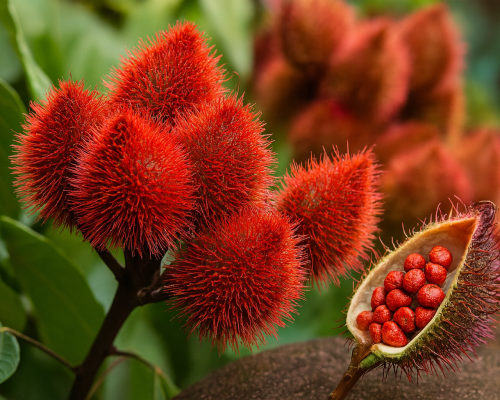
Origin and Composition of Natural Orange Food Color
The coloring components of annatto are primarily carotenoid pigments, including bixin and norbixin, which give the characteristic yellow to deep orange hues.
Bixin is oil-soluble and ideal for fat-based systems such as cheese, butter, and margarine.
Norbixin is water-soluble and well-suited for beverages, desserts, and other aqueous formulations.
Beyond pigmentation, annatto seeds are rich in terpenoids, flavonoids, and other phytonutrients with strong antioxidant properties that can help neutralize free radicals and support product stability.
Health and Functional Benefits of Annatto Natural Orange Food color
Scientific research has shown that annatto exhibits antioxidant, antimicrobial, and potential anti-inflammatory effects, largely due to its active compounds bixin and norbixin.
These carotenoids can help protect lipids and proteins in foods from oxidation, contributing to longer shelf life and improved product quality.
Laboratory studies also demonstrate that annatto extracts can inhibit the growth of harmful bacteria such as Staphylococcus aureus and Escherichia coli, and can help suppress molds and yeasts in bakery products. This makes annatto not only a colorant but also a functional ingredient that can naturally support food preservation.
Applications of Natural Orange Food Color in the Food Industry
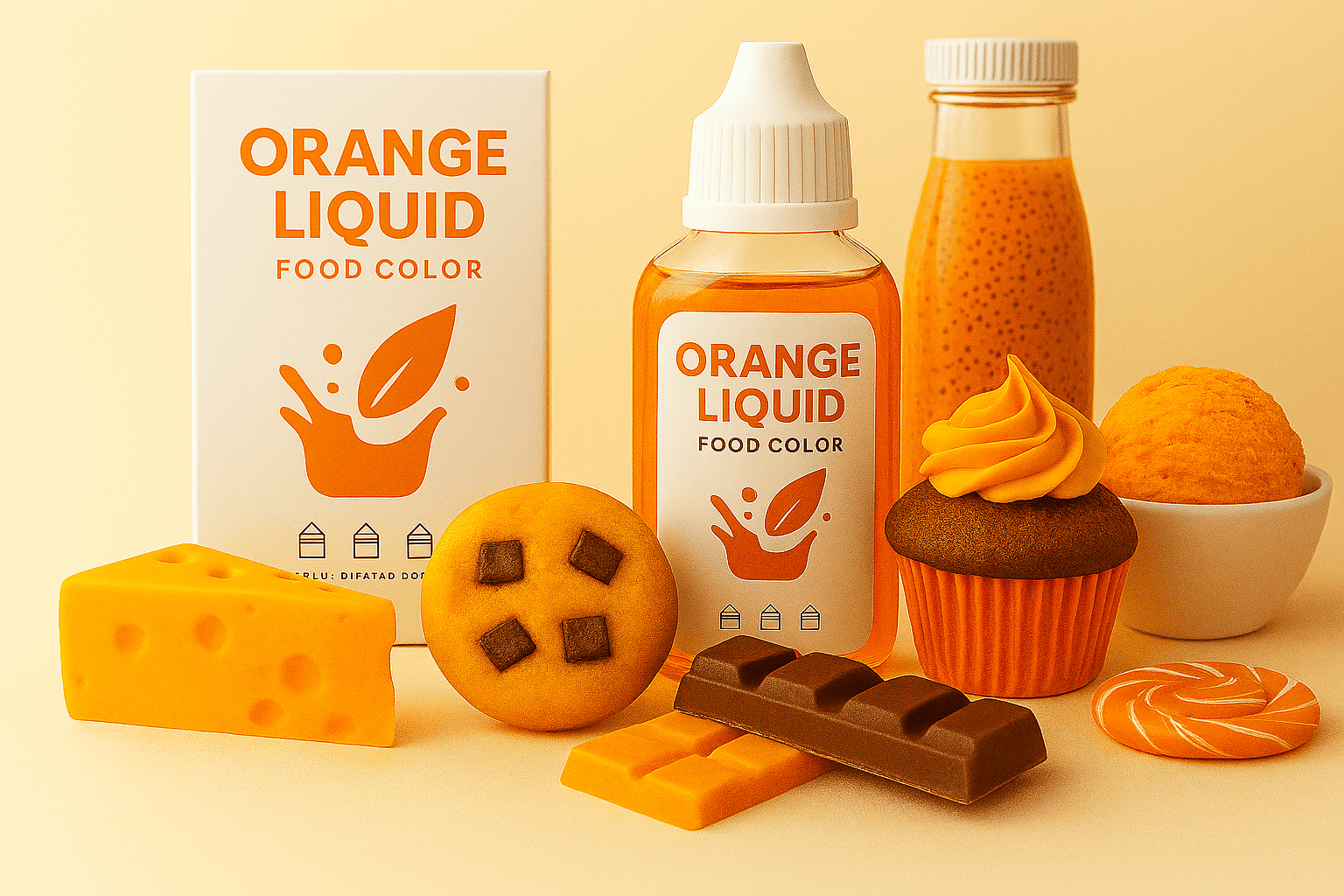
Annatto-based natural orange food color is widely used in:
- Dairy products: cheddar, processed cheese, butter, cream, yogurt
- Bakery and snacks: cakes, biscuits, bread, coatings, and crumb mixes
- Beverages and desserts: fruit juices, flavored milk, puddings, and jellies
- Oils and fats: margarine, salad dressings, and cooking oils
- Condiments and sauces: mayonnaise, ketchup, and savory spreads
Its heat stability (up to typical processing temperatures), compatibility with proteins and emulsions, and neutral flavor profile make it versatile across formulations.
Regulatory and Technical Information
In the European Union and many international markets, annatto is approved as a natural color additive under the code E160b. It complies with food-grade standards and is considered safe for use when applied within recommended dosage limits.
| Property | Description |
|---|---|
| Active pigment | Bixin / Norbixin |
| Solubility | Oil-soluble / Water-soluble |
| Recommended dosage | 10–300 mg/kg (depending on desired shade) |
| Heat stability | Good (up to 180 °C) |
| Light stability | Improved in protein-rich or fat-based systems |
| Shelf life | 12–24 months (store in cool, dry, dark conditions) |
| Packaging | Food-grade drums or HDPE containers, available for export |
Comparison with Synthetic Colors
Unlike synthetic colorants such as Orange GGN or petroleum-derived dyes, annatto offers a natural and sustainable alternative.
Consumers today are increasingly demanding clean-label, plant-based ingredients that are free from artificial additives. Using annatto helps food manufacturers position their products as healthier and environmentally responsible, without compromising on appearance or stability.
Sustainability and Clean-Label Advantage
Annatto production supports environmentally friendly practices. Because it is derived from a renewable plant source and often cultivated in tropical agroforestry systems, it contributes to sustainable sourcing. In addition, its minimal processing and lack of petrochemical inputs align with modern clean-label standards — a growing priority in international food markets.
Export and Supply
Annatto colorants are available in bulk quantities and are suitable for international trade. Exporters typically offer multiple packaging sizes and technical support for shade matching, formulation, and compliance with destination-country regulations. Samples and documentation are usually provided upon request to facilitate formulation testing and product registration.