Caramel Brown
Natural Caramel Brown Food Color (E150) — Natural, Functional, and Export-Ready
Caramel Brown is a natural food color produced by carefully heating sugar. As a result, this process generates a deep brown pigment with warm, rich tones. Moreover, caramel color dissolves easily in water and delivers strong, consistent color. Because of these qualities, it has become one of the most popular natural colorants in the global food industry. Furthermore, its ability to provide shades ranging from light amber to dark brown makes it both cost-effective and versatile for numerous applications.
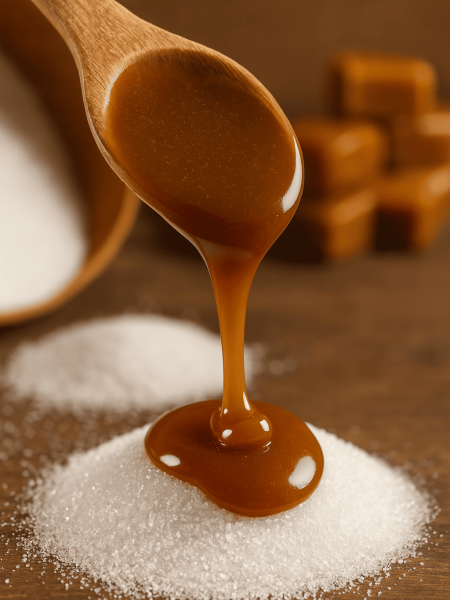
In this image, natural caramel food color pours from a spoon onto granulated sugar, demonstrating its plant-based, clean-label appeal for desserts and beverages.
Origin and Composition of Natural Caramel Brown Food Color
Caramel color forms when sugar or glucose syrup undergoes controlled thermal treatment. Depending on the method used, manufacturers can produce different intensity grades (Class I–IV), each offering unique properties in terms of hue and stability.
Key characteristics include:
-
Source: Sugar (caramelization process)
-
Form: Liquid (water-soluble)
-
Color tone: Light amber to dark brown
-
Key feature: High stability under heat, light, and acidic environments
-
Additional property: Natural emulsifying and thickening effects
Consequently, caramel color not only enhances appearance but also improves the texture of many food products.
Health and Functional Benefits of Natural Caramel Brown Food Color
Caramel Brown is a plant-based, natural colorant that contains no synthetic chemicals or artificial additives.
Its main advantages are:
-
Safe and natural: Manufacturers produce it from sugar without petrochemical ingredients
-
Stable performance: It resists heat, light, and pH variations
-
Functional benefits: It enhances texture and naturally thickens products
-
Cost efficiency: Strong color intensity requires only low dosage levels
In addition, these features make it highly attractive for companies seeking both quality and sustainability.
Applications of Natural Caramel Brown Food Color in the Food Industry
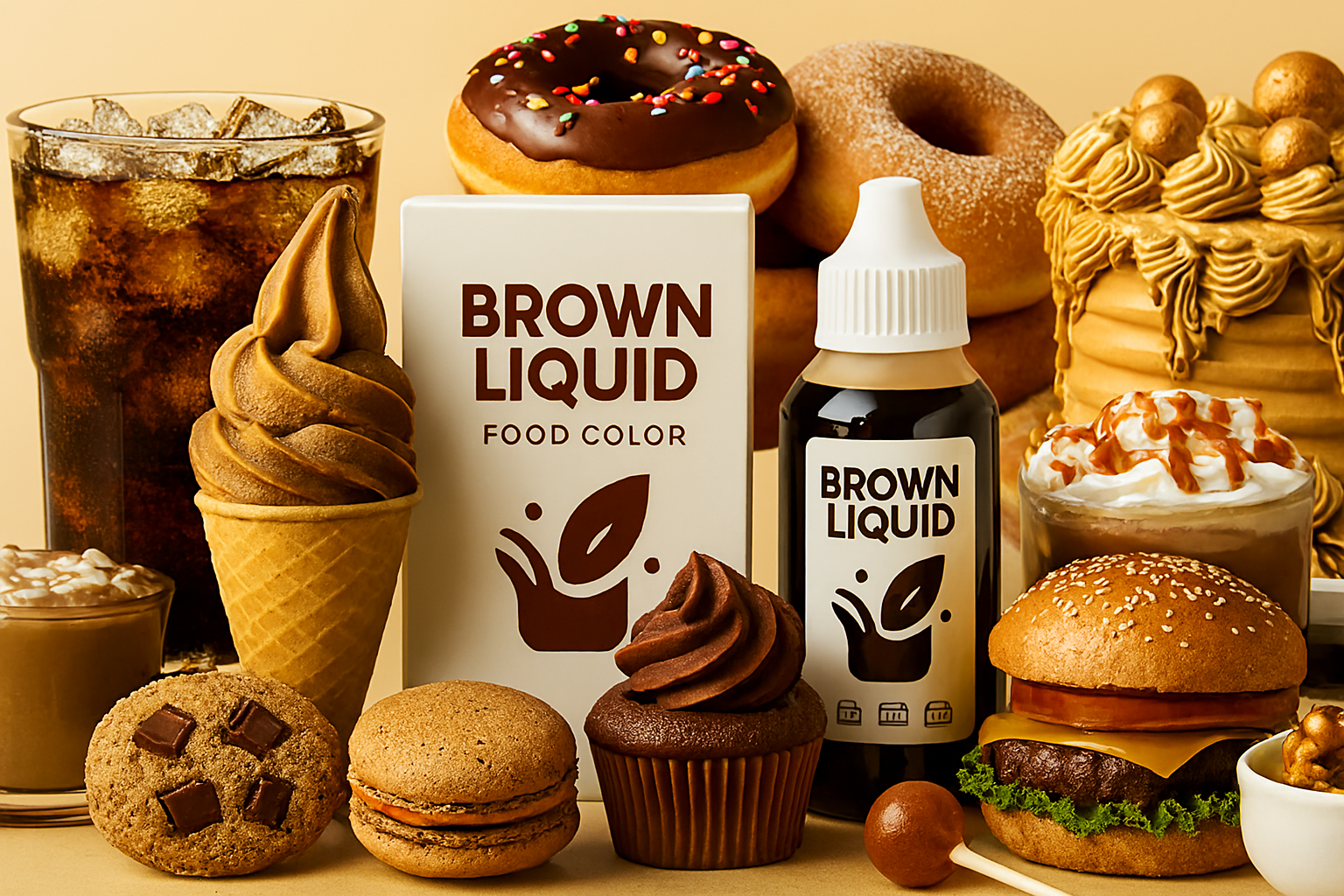
Caramel color demonstrates exceptional versatility across many product categories. For example:
-
Beverages: Colas, dark soft drinks, malt beverages, coffee syrups
-
Bakery & Confectionery: Cakes, biscuits, chocolate fillings, coatings
-
Sauces & Condiments: Barbecue sauce, soy sauce, savory dressings
-
Pickled goods & Snacks: Enhances visual appeal and ensures uniform browning
Moreover, it mixes easily in liquids and retains its color even after heating or baking, ensuring consistent results in production.
Regulatory and Technical Information
Caramel color is recognized as a natural color (E150, Classes a–d) in the EU and many other countries. It is widely accepted for use in foods and beverages and considered safe when applied within recommended usage levels.
Caramel brown provides excellent stability to heat, light, and acidic environments, ensuring consistent shade and performance across industrial applications.
| Property | Description |
|---|---|
| Active pigment | Caramel compounds (melanoidins) |
| Solubility | Water-soluble |
| Recommended dosage | 10–300 mg/kg (depending on desired shade) |
| Heat stability | Excellent |
| Light stability | Excellent |
| Shelf life | 12–24 months (store in a cool, dry, dark place) |
| Packaging | Food-grade drums or HDPE containers, available for export |
Comparison with Synthetic Colors
Unlike artificial browns such as Brown FK, Brown HT, or iron oxide pigments, Caramel Brown is naturally derived and free from harmful chemicals.
It provides the same deep tone and opacity as synthetic colors, but with the added advantages of safety, natural origin, and consumer trust.
Sustainability and Clean-Label Advantage
Caramel Brown is produced from renewable plant-based materials (sugar) through a simple heat process with no petrochemical residues.
Its clean-label nature aligns with consumer demand for natural, transparent, and environmentally friendly food ingredients.
Export and Supply
Caramel Brown is supplied only in liquid form, ensuring consistent dispersion and easy application in food and beverage manufacturing.
It is packed in durable food-grade HDPE containers designed to maintain freshness and stability during storage and transport.
With its stable color performance and broad compatibility, Caramel Brown is a practical natural color solution for modern food production.